Samlingssal, Sorø Akademi, konkurrencebidrag
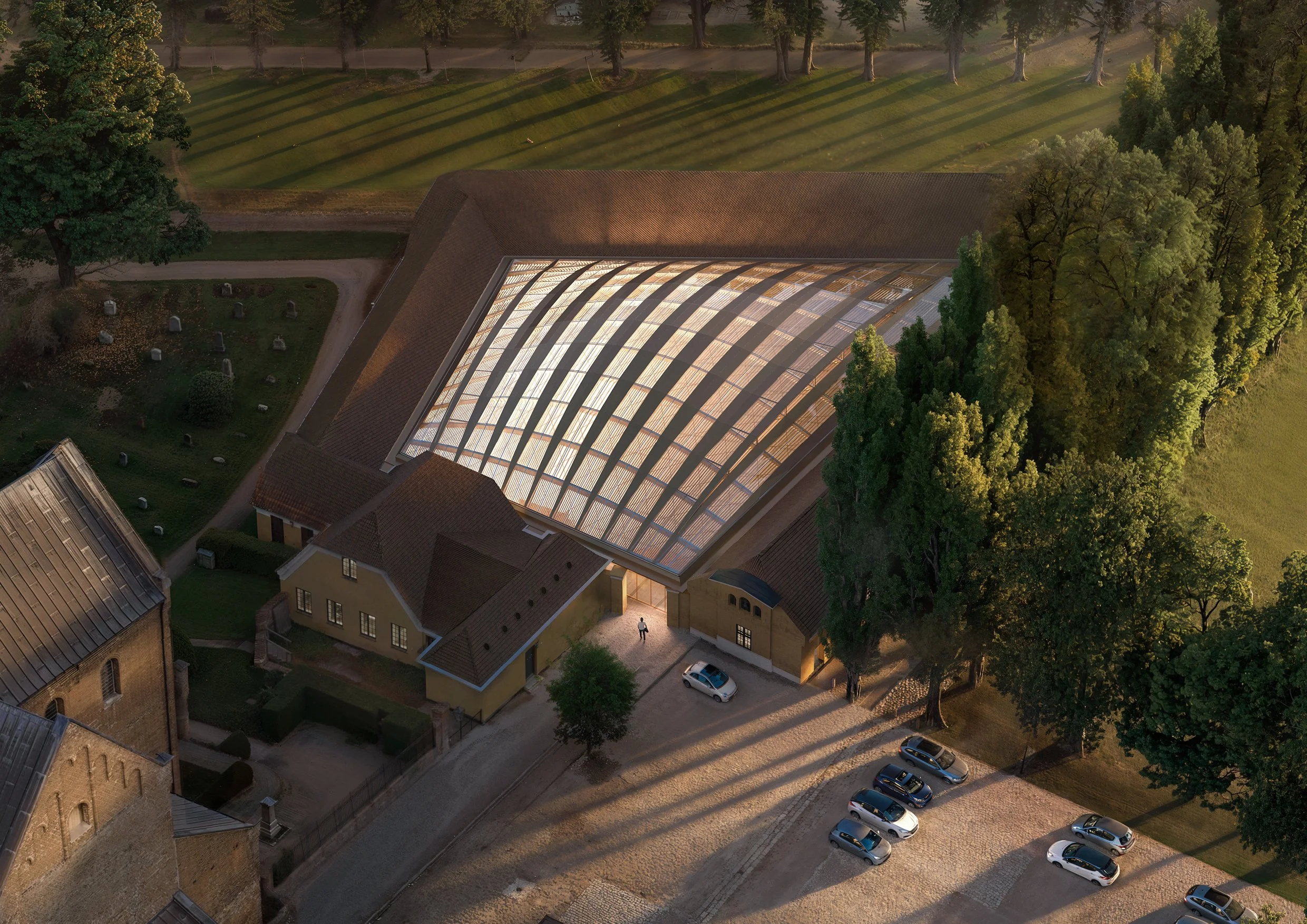
Mødet mellem bygningskulturarv og ‘state-of-the-art’ ingeniørkunst.
Projekt
Ny samlingssal til Sorø Akademi
Bygherre
Sorø Akademi og A.P. Møller Fonden
Areal
2.000 m2
Arkitekt
MIKKELSEN ARKITEKTER A/S
Samarbejdspartnere
ARUP
Vision og kulturmiljø
Arkitekturen har på Sorø Akademi fra begyndelsen spillet en afgørende rolle. Hver ny tilføjelse har været en værdig repræsentant for sin egen tids arkitektur, men har samtidig forstærket det samlede kulturmiljø på Akademigrunden. På samme måde skal den nye samlingssal være udtryk for sin tids stærkeste arkitektur, men føje sig naturligt ind som den nyeste tilføjelse til et af Danmarks fornemme kulturmiljøer
Et uderum bliver til et ”inderum”. Den tidligere materielgård transformeres til et samlende socialt omdrejningspunkt i et stærkt kulturmiljø. En ny bygning – på en gang både ydmyg og ambitiøs - indgår i en ny, sammensat arkitektonisk helhed hvor dialogen med det eksisterende 1820 miljø skaber en ny kulturel og bæredygtig relevans med en stærk fællesskabsorienteret identitet. Vi ønsker at skabe en ny stærk balance hvor det eksisterende kulturmiljø og en ny bæredygtig arkitektur næres ved deres indbyrdes dialog.
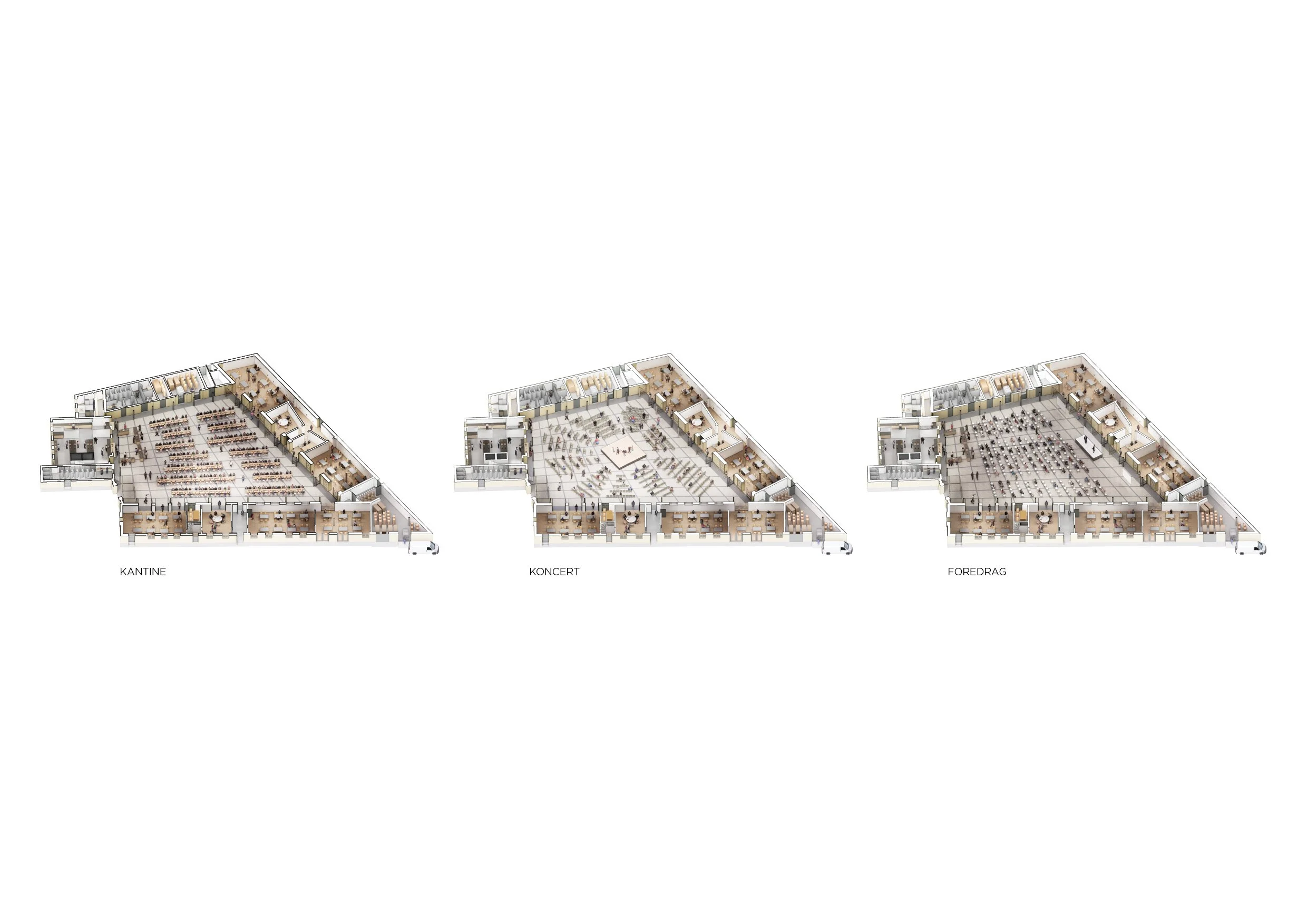
Det nye forsamlingsrum tager udgangspunkt i, og defineres af den eksisterende gårds særegne plangeometri og arkitektur. Rummet vil fungere i stærk dialog med de omkransende bygningers indre - og skaber en særlig funktionel, social og rumlig samhørighed.
Sanselighed og innovation
Omend hverken fredet eller SAVE-registreret, fremstår Avlsgården i høj grad som værende bevaringsværdig, både i sin egen ret men også i særdeleshed som en brik i Sorø Akademis større kulturmiljø. Avlsgårdens typologisk klarhed, kalder på, at den nye samlingssal ikke forsøger at efterligne gården, men fremstår i sin egen ret; dels som et stærkt udsagn for arkitektur i det 21.århundrede, dels som et bagtæppe for avlsgårdens eksisterende bygninger.
De 200 år der er gået siden Avlsgården blev opført, har set mange arkitektonisk og bygningskulturelle udviklinger. Nutidens arkitektur kalder i højere grad end tidligere, på et formsprog formuleret i tæt dialog med ingeniørkunsten, således materialeforbruget minimeres mest muligt, medens bygbarheden og komforten sikres og eftervises.
Avlsgårdens typologi, Akademiets kulturmiljø, og nutidens byggeri vil sammen skabe oplagte rammer for at udfolde et ambitiøst bud på, hvad socialt orienteret arkitektur og ‘state-of-the-art’ ingeniørkunst kan opnå tilsammen.
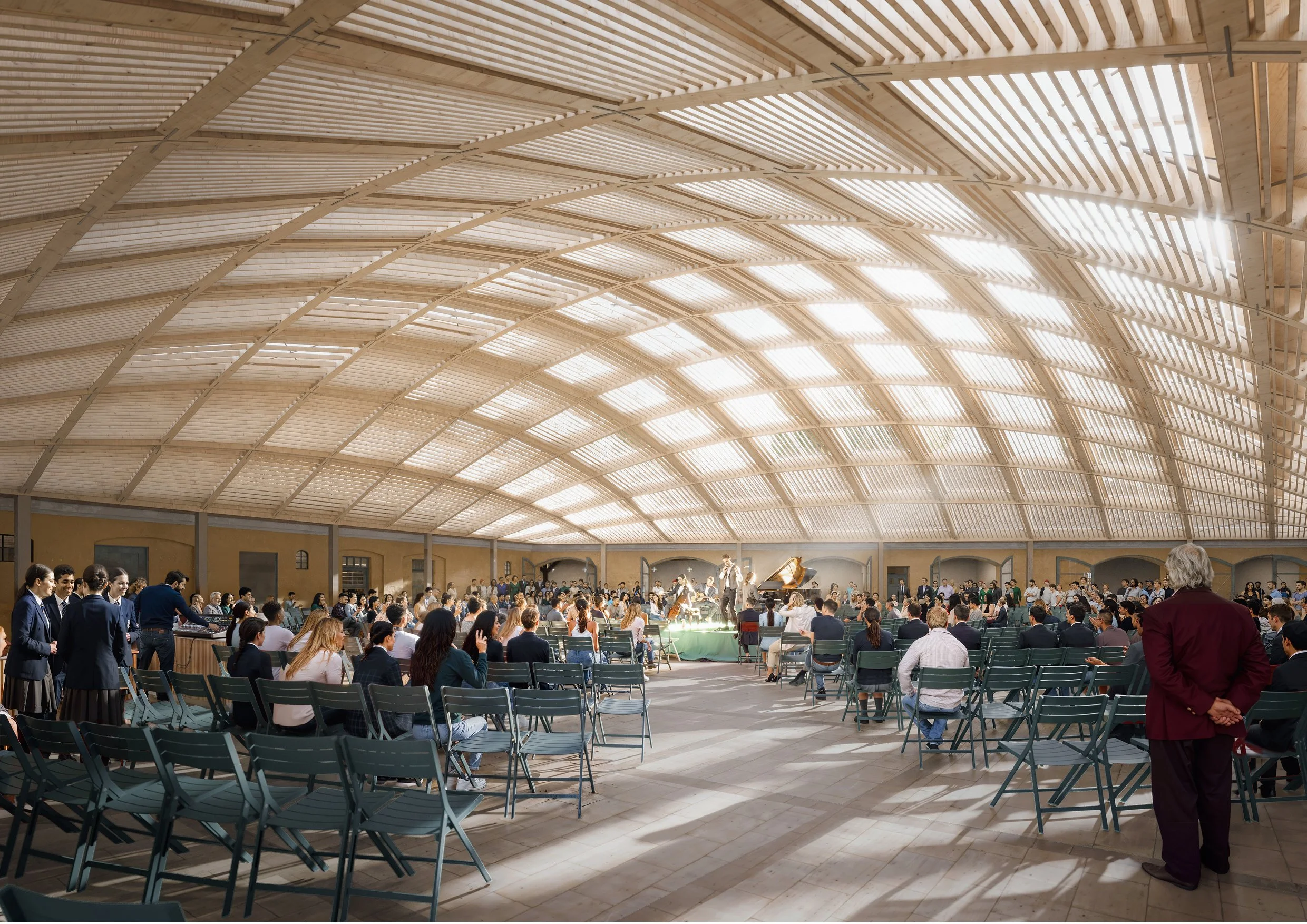
Overdækningens optimerede geometri, og de subtile kantsøjler sikre en ny samlingssal der, uafhængigt af Avlsgården konstruktioner, skaber et let og luftigt rum, hvori skolens elever og lærere og andre brugere kan opleve samlingssalen som et bytorv - denne oplevelse understreges af, at det nye dæk i gårdrummet udføres med en let hældning defineret af de eksisterende indvendige gulvkoter, således at hele byggeri vil fremstå niveaufrit og let tilgengæligt.
Konstruktion
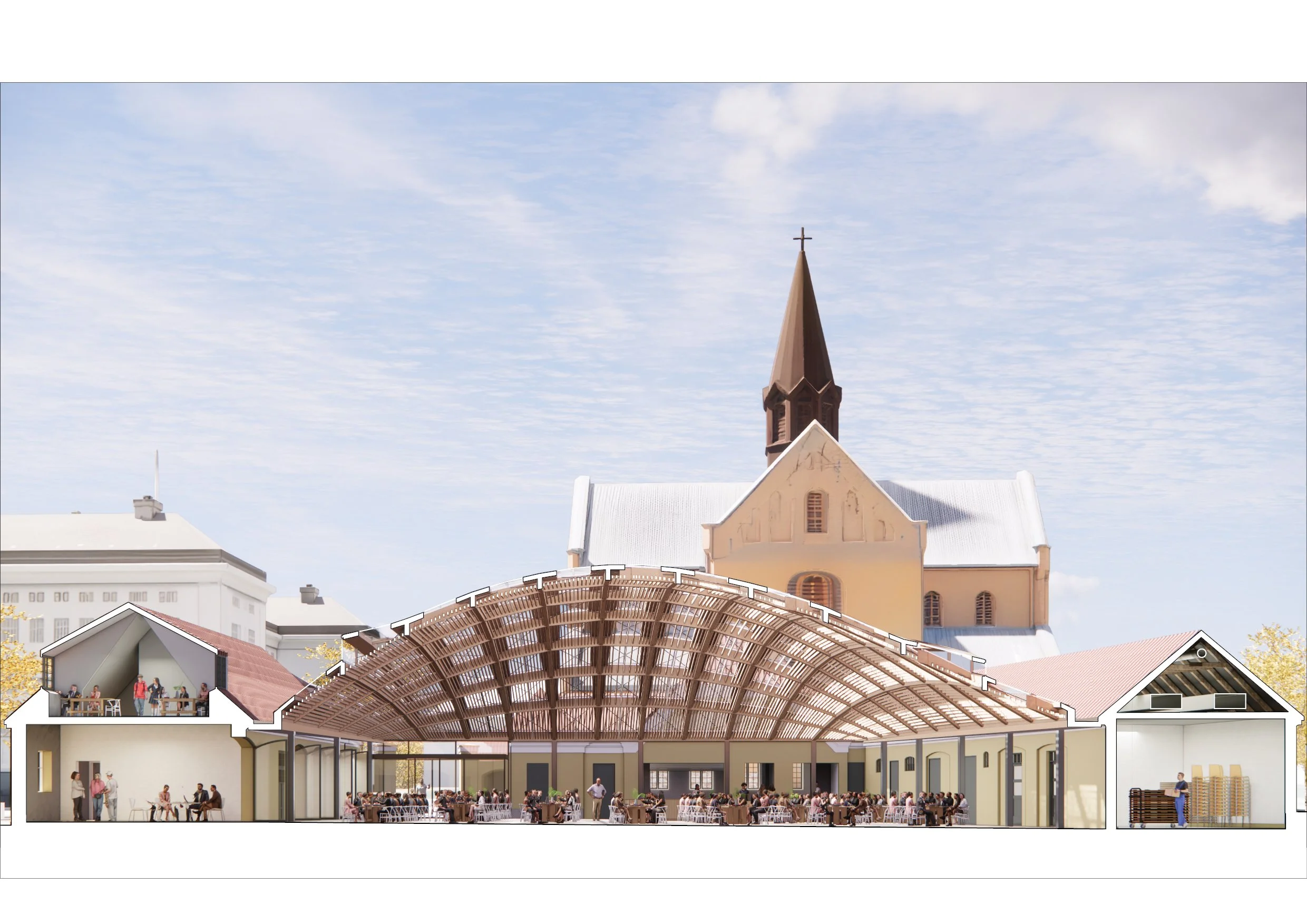
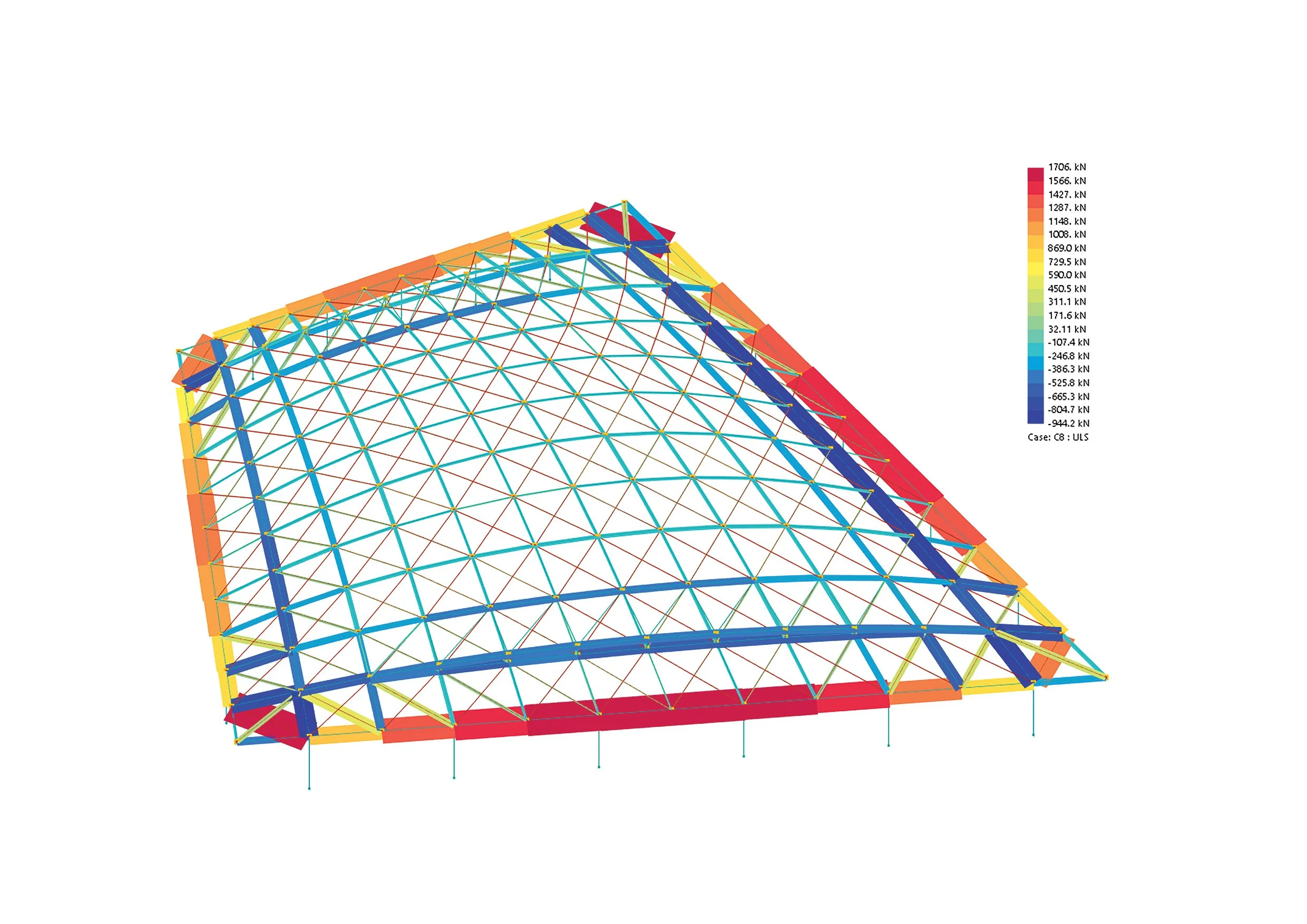
Tagkonstruktionen er udformet som en selvstændig konstruktion, uafhængig af de eksisterende bygninger omkring gårdspladsen, og har en hvælvet geometri, som er formoptimeret for at maksimere dens strukturelle effektivitet som en trykkuppel. Tagets geometri giver en effektiv trykbærende virkning i det primære buede gitter og eliminerer behovet for tunge bøjende elementer, der ellers ville være nødvendige for at spænde over den store afstand ved en mere traditionel, ikke-formaktiv tagløsning på en plan flade. Kuppelhøjden er fastsat til 8,5 meter over eksisterende terræn for at optimere konstruktionens effektivitet og samtidig overholde den højdebegrænsning, der er fastlagt i projektoplægget.
Beslutningen om at designe taget som en selvstændig konstruktion er primært truffet for at undgå overbelastning af de eksisterende historiske murværkskonstruktioner, som ellers ville have krævet omfattende forstærkningsarbejder og væsentlige ændringer af facaderne mod gårdrummet. Disse ændringer ville sandsynligvis have omfattet indførelse af en betonringbjælke ved udhængsniveau samt forstærkning af tværvægge for at modstå de horisontale trykkræfter fra den nye hvælvede tagkonstruktion.
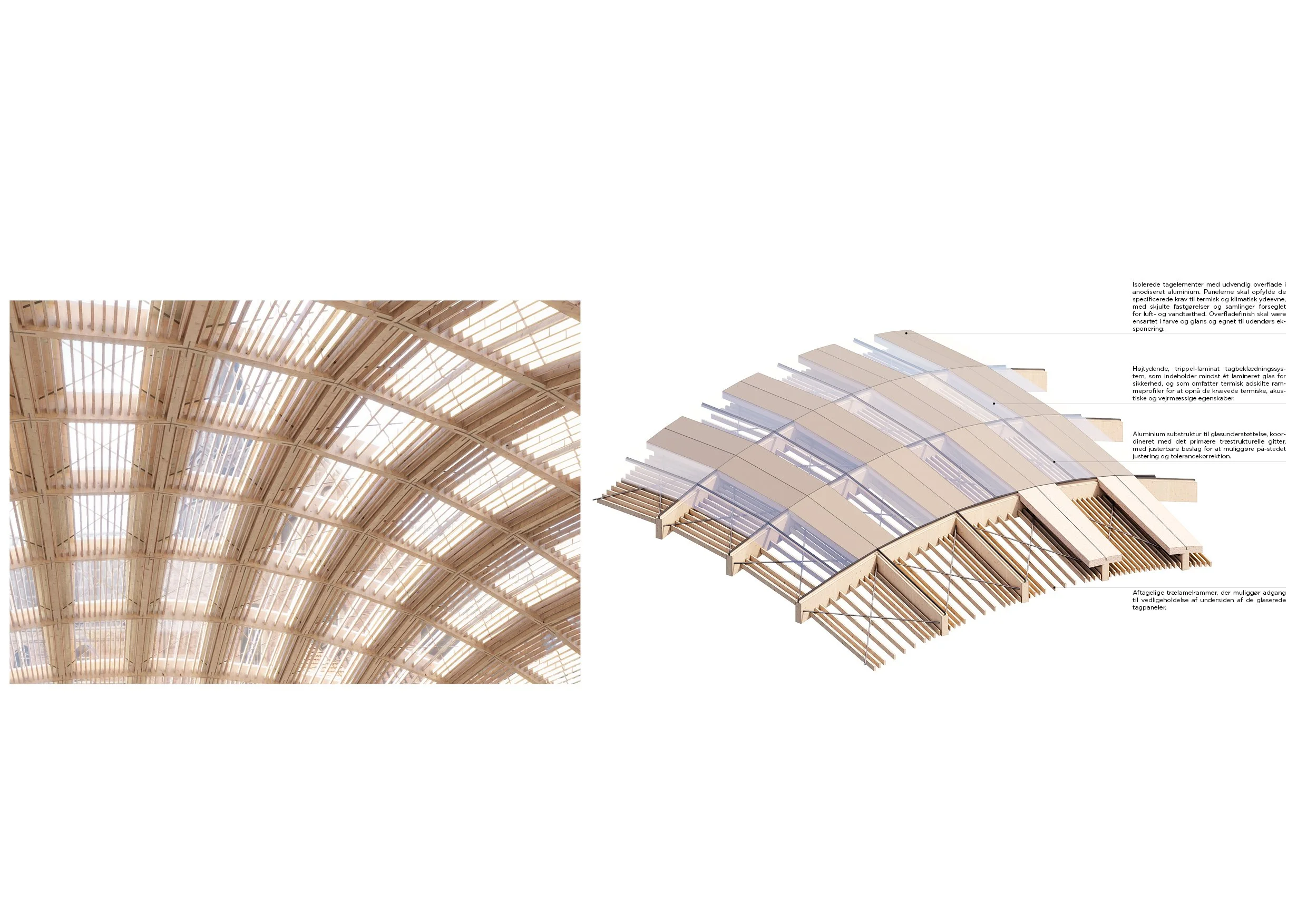
Gitterets geometri og afstand er fastlagt for at opnå en optimal balance mellem strukturel effektivitet, tagets gennemtrængelighed for dagslys og opdeling i plane glasfelter af håndterbar størrelse. Til kuppelkonstruktionen er der valgt GL32h højstyrke limtræ for at minimere tværsnittene i det bærende gitter og maksimere udsynet mod omgivelserne. Den bærende konstruktion er baseret på en 12x11-opdeling af gårdspladsen.
Lignende projekter